
Common Floor Plan Measuring Mistakes (and How to Avoid Them)
The mistakes that most often spoil a floor plan — and simple habits that prevent them — so your sketch comes back accurate the first time.
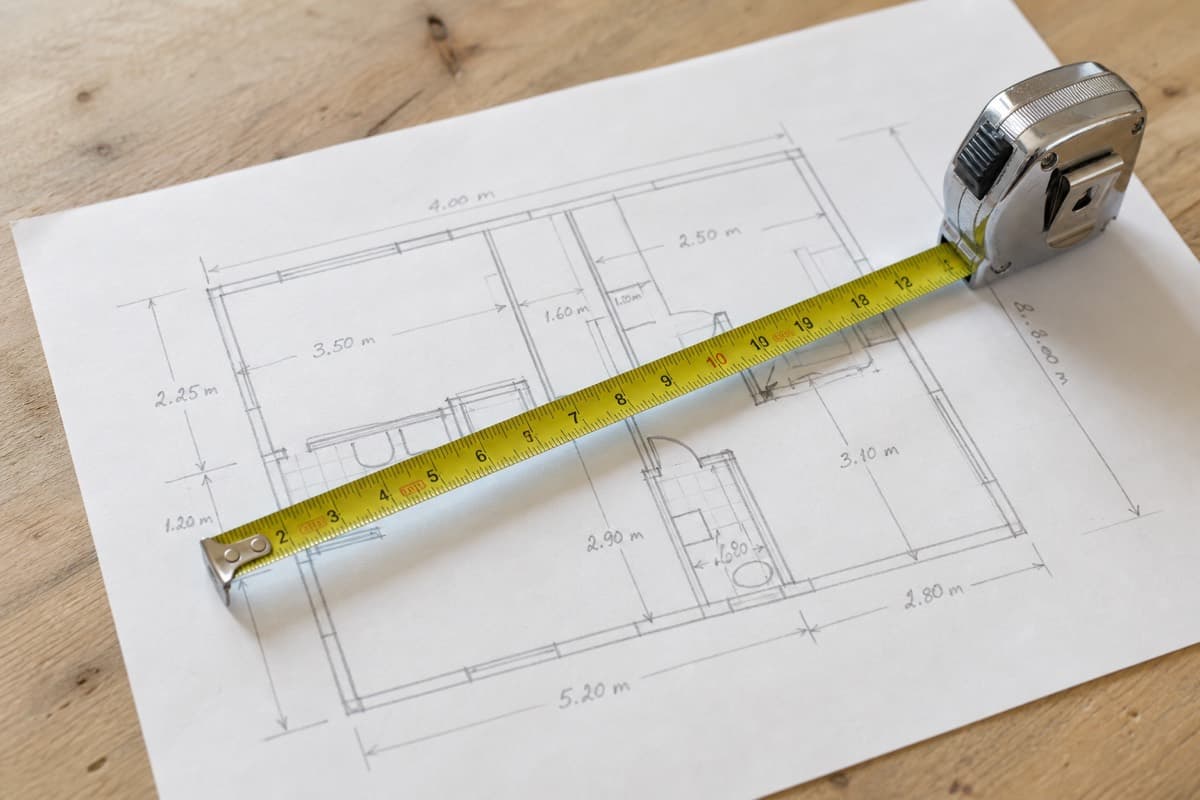
What are the most common floor plan measuring mistakes?
The most common floor plan measuring mistakes are missing walls or whole rooms, measuring to the skirting board instead of the wall, forgetting the stairwell void on upper floors, ignoring alcoves and chimney breasts, mixing units, and not cross-checking opposing walls. Measuring clockwise and checking that opposite walls add up prevents most of them.
Key takeaways
- Sketch the whole floor before measuring so you don't miss a wall.
- Measure clockwise from the same corner every time.
- Cross-check opposing walls — they should add up.
- Don't forget the stairwell void on upper floors.
- Measure alcoves and chimney breasts separately.
- Keep your units consistent and clearly labelled.
Most floor plan problems are not drawing problems — they are measuring problems. The good news is that the same handful of mistakes come up again and again, and they are all easy to avoid with a little method.
Ready to turn your sketch into a floor plan?
Upload your hand-drawn sketch and measurements and our team will redraw them into a clean, professional floor plan — ready for listings, brochures and marketing.
1. Missing a wall or a whole room
It is surprisingly easy to walk past a small wall, a corridor or a cupboard and never record it. Fix: sketch the entire floor outline first, before you measure anything, so you have a framework that shows every wall waiting for a number.
2. Measuring to the skirting board
Laser measures are often fired at floor level, where a skirting board adds a couple of centimetres. Across a whole property these errors add up. Fix: aim above the skirting at the wall face, or be consistent and note that you measured to the skirting.
3. Forgetting the stairwell void
On an upper floor, the space above the staircase is an open void, not a room. Drawing it as solid floor overstates the area. Fix: sketch the void clearly and label it so it is shown as open.
4. Ignoring alcoves and chimney breasts
Chimney breasts and recessed alcoves change the shape of a room and are a common cause of totals that do not add up. Fix: measure the width and depth of each one separately and mark its position.
5. Mixing units
Recording some rooms in metres and others in feet, or switching mid-sketch, leads to conversion errors. Fix: pick one unit — metres are best — and stick to it throughout. Label clearly.
6. Not cross-checking opposing walls
This is the big one. Fix: in each room, add up the segments along one wall and compare them to the opposite wall. They should match. If they are more than a couple of centimetres apart, re-measure before you move on. This single habit catches most errors.
7. Vague door and window notes
"Window here" with no width or position leaves gaps in the plan. Fix: note the width and roughly how far each opening is from the nearest corner. A quick note is enough.
8. Rushing the sketch
A neat-looking but incomplete sketch is worse than a messy complete one. Fix: prioritise capturing everything over making it tidy. We can read a messy sketch; we cannot read a missing measurement.
Use the checklist
Our printable sketch template includes a measurement checklist so you can tick off walls, doors, windows, stairs and cupboards room by room — the easiest way to make sure nothing is missed.
What if you make a mistake anyway?
We check every sketch for sense before we draw it and will flag anything that looks off — like room totals that do not reconcile. If a measurement turns out to be wrong after the plan is drawn, one round of amendments is included after the initial draft. Avoid the mistakes above, though, and you will usually get a finished plan back the first time.
Ready to turn your sketch into a floor plan?
Upload your hand-drawn sketch and measurements and our team will redraw them into a clean, professional floor plan — ready for listings, brochures and marketing.
- #floor plan measuring mistakes
- #how to measure a floor plan
- #accurate floor plan
Frequently asked questions

The Sketchplan Team
Floor Plan Specialists
The Sketchplan team redraws hand-drawn sketches and measured notes into clean, professional CAD-style floor plans for estate agents, landlords, homeowners and property photographers across the UK.
Ready to turn your sketch into a floor plan?
Upload your hand-drawn sketch and measurements and our team will redraw them into a clean, professional floor plan — ready for listings, brochures and marketing.
Order on sketchplan.rehub.studio · see how it works
Keep reading
Related guides

Floor Plans for HMO and Room Lets
How landlords and agents use floor plans for HMO licensing, room-by-room marketing and inventories — and how to produce one from a sketch.

How Estate Agents Get Floor Plans Without a Surveyor Visit
How UK estate agents produce listing-ready floor plans without booking a measured survey — sketch at the viewing, measure carefully, redraw remotely.
How to Label Rooms and Dimensions for Portal Listings
Practical rules for room names, dimensions and abbreviations on marketing floor plans so Rightmove and Zoopla listings stay clear and consistent.